
Before a long train journey, after a late night, or just because it's the weekend: few things set you up for the day like a full English. It's on the breakfast menu at Nonòs Judd Street, our Greek Mediterranean kitchen and bar at 112 Judd Street, London WC1H 9NT, five minutes' walk from King's Cross St Pancras, as the Nonòs Full English. Here's what a full English is, where it comes from, and what's on our plate.
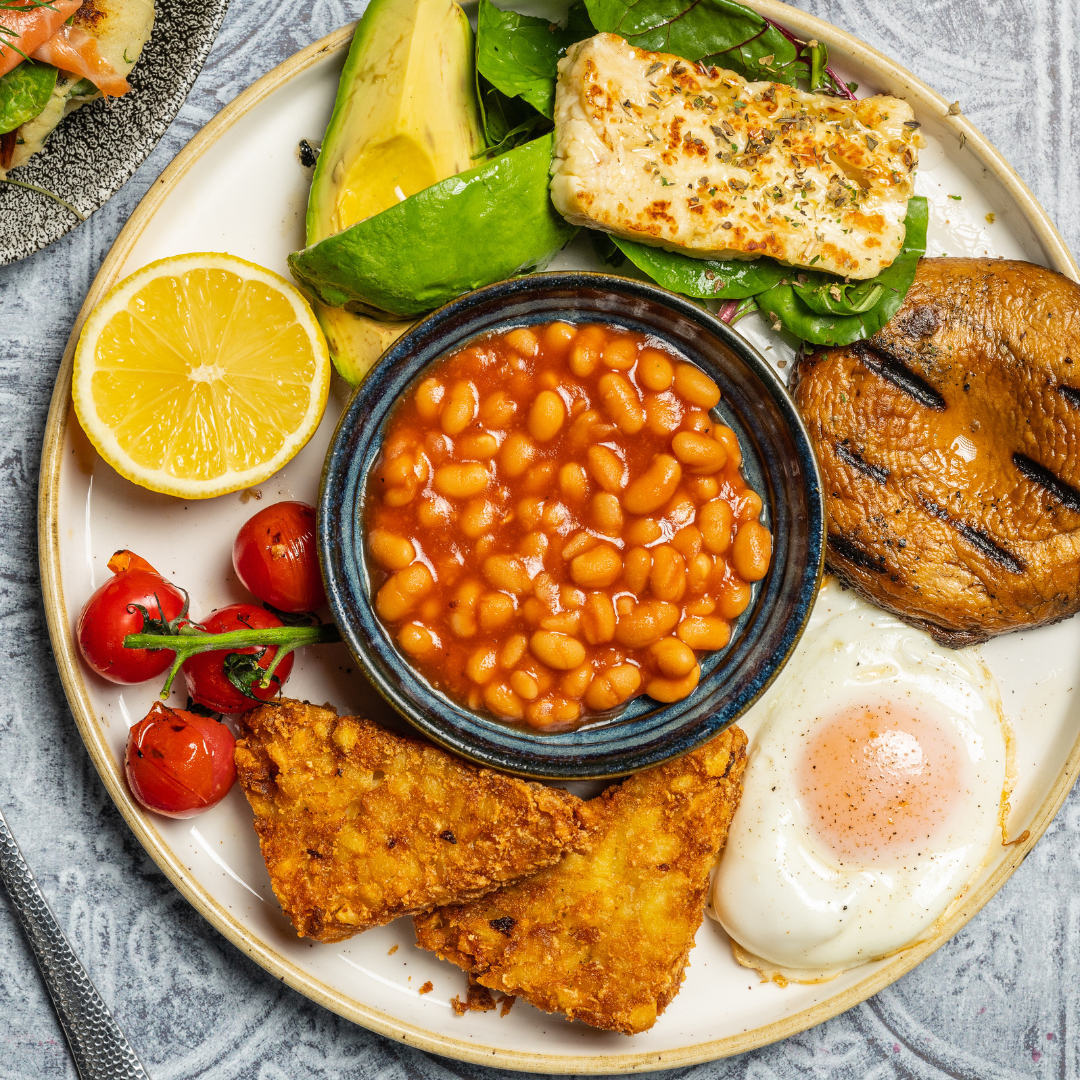
What goes on the plate
A full breakfast, or fry-up, is a substantial cooked breakfast from Great Britain and Ireland. Depending on where you are, it's a full English, a full Scottish, a full Welsh, a full Irish or an Ulster fry. There's no fixed recipe for a full English, but a traditional one usually includes back bacon, sausages, eggs, fried or grilled tomatoes, fried mushrooms, black pudding, baked beans, and toast or fried bread. Baked beans and hash browns are modern but now very common additions, and hash browns have largely taken the place of the old bubble and squeak.
In a 2017 YouGov poll of people's ideal full English, more than half chose bacon, sausage, beans, toast or fried bread, eggs, hash browns, mushrooms and tomatoes. Black pudding was the least popular of the traditional ingredients, picked by 35% of people.
A Victorian institution
Big cooked breakfasts didn't really appear in English life until the 19th century, when they turned up quite suddenly in the Victorian era. Before then, breakfast was more often bread with jam or marmalade, or porridge. A breakfast of fried ham and eggs appears in Isabella Beeton's Book of Household Management in 1861, and the full breakfast became a slimmer, quicker version of the grand country-house breakfasts of the upper classes, one the growing middle classes could afford and eat before a day's work. It peaked in Edwardian Britain, became a working-class staple in the 1950s, and today it's more often an occasional treat. It's also sometimes called the "Full Monty", and one theory links the name to General Montgomery, said to have started every day in North Africa with a full English. Background from Wikipedia's full breakfast page.
Our Nonòs Full English
On our breakfast menu, the Nonòs Full English is a fried egg, two bacon rashers, mushroom, sausages, roast tomatoes, baked beans, a hash brown and sourdough bread. You can add extras such as a poached egg, more bacon or sausage, grilled halloumi or another hash brown. Breakfast is served from 08:30 to 12:00, seven days a week, so it fits nicely before a train from King's Cross or St Pancras. Have it with an Americano, a cappuccino, an English Breakfast tea or a freshly squeezed orange juice.
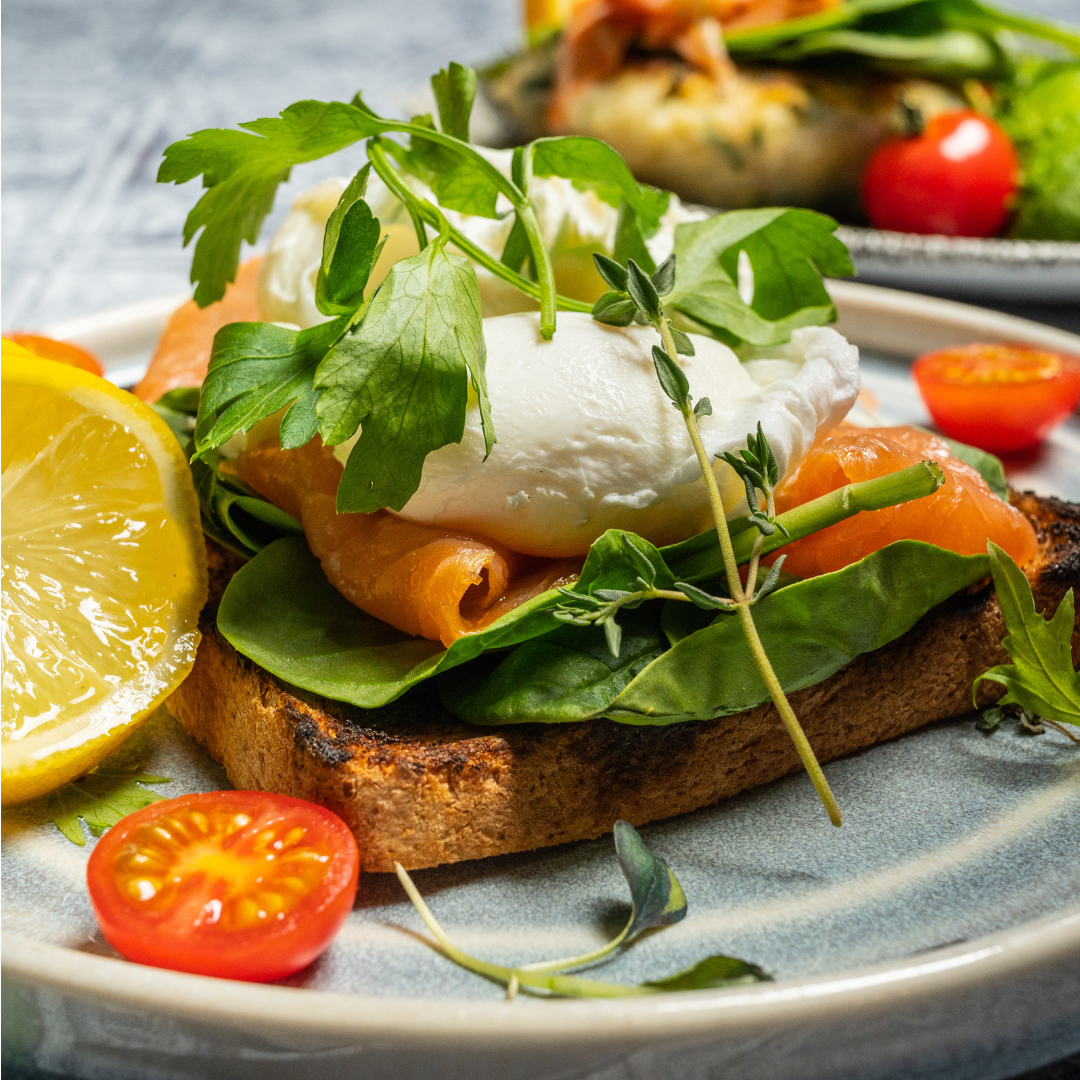
Colin, who walked in on a Saturday morning, wrote: It was a very well done breakfast/brunch.
(Colin, Google review) And Donna's verdict: Food lovely, good portions and piping hot.
(Donna, Google review)
Meat-free, or something lighter
If you don't eat meat, there's a Vegetarian Breakfast with two poached eggs, halloumi, avocado, beans, roasted plum tomatoes and a hash brown, and a Vegan Breakfast with beetroot, a hash brown, portobello mushroom, gigantes beans, smashed avocado, hummus and cherry tomatoes on seeded sourdough. Fancy something different? Try the Hash Benedict, the Shakshuka, a three-egg Omelette with mushrooms, cheese and tomato, or the Scorched Butter French Toast. See our posts on Hash Benedict, shakshuka, French toast, vegetarian and vegan food and brunch in King's Cross.
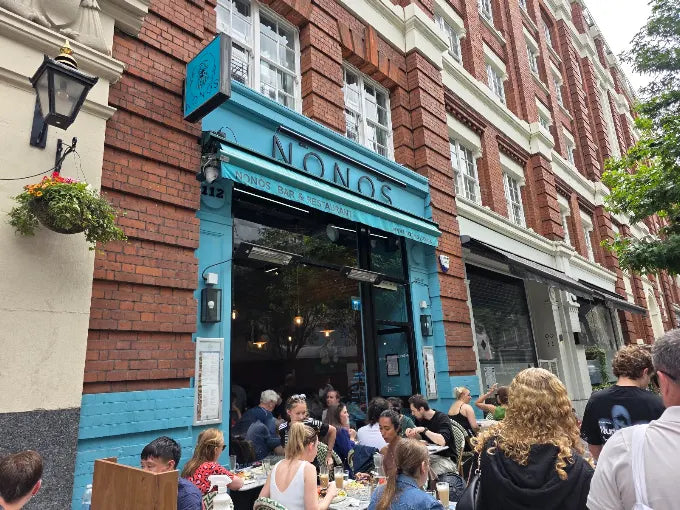
“A simple, welcoming neighborhood favorite — definitely worth a stop!”
Amina, Google review, 2026
Good to know
- Address: 112 Judd Street, King's Cross, London WC1H 9NT. Phone 020 7278 9700.
- Hours: Sunday to Wednesday 08:30–22:00, Thursday to Saturday 08:30–23:00. Breakfast is served 08:30–12:00, and the à la carte menu starts at noon.
- Allergies: the Full English includes egg, and the sourdough contains gluten. Please speak to our team about allergies and dietary requirements before you order. Menus may vary slightly by location and season.
A proper breakfast from 08:30. Book a table at Nonòs Judd Street or just walk in.